Finding a Comfortable Sleeping Position With a CPAP Mask
How you sleep shapes how a CPAP mask feels. Here are practical tips for back, side and front sleepers, plus simple ways to manage the tube and pillow.
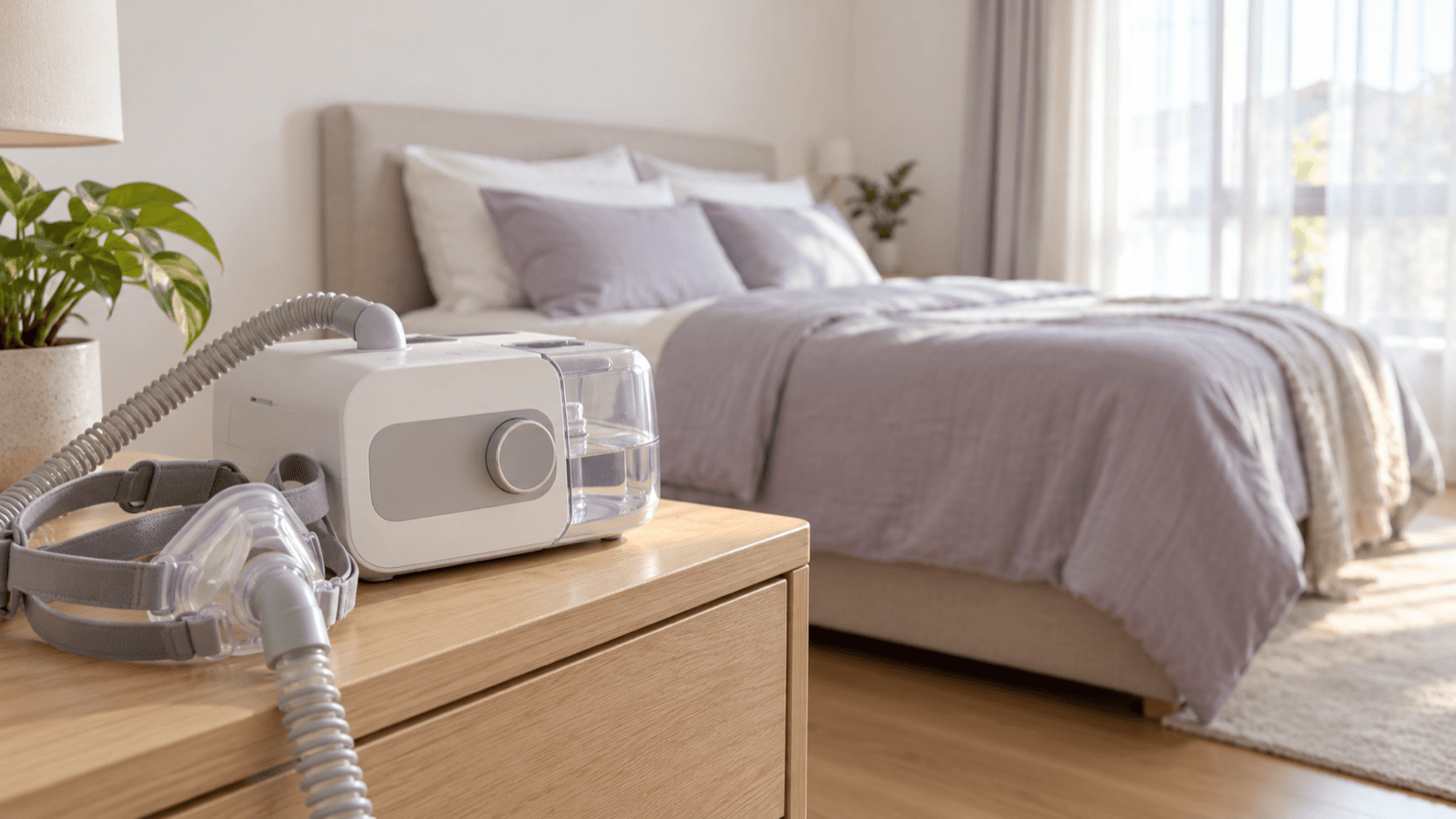
Practical tips for a comfortable sleeping position with a CPAP mask
Most of us have a favourite way to fall asleep, and we do not want to give it up for a machine. The good news is that you usually do not have to. With the right mask type and a few small changes to your pillow and tube, most sleeping positions can work with CPAP. Here is what first-time users often find helpful.
If you sleep on your back
Back sleeping is often the simplest position with a CPAP mask, because nothing presses against the cushion. Any of the three main mask types can sit comfortably: nasal (such as the AirFit N20), nasal pillows (AirFit P30i) or full face (AirFit F20).
The main thing to watch is the tube. If it lies across your chest, it can pull the mask when you move. Try running it up over the headboard or along the top of the pillow, so it comes down to the mask from above.
If you sleep on your side
Side sleeping is very common, and it is where most first-week leaks happen. When your cheek presses into the pillow, the pillow can push the mask out of place.
- Lie on your side first, then adjust the straps lightly. A mask fitted while sitting up often shifts when you lie down.
- Pull the pillow slightly back, so the mask rests at its edge rather than in the middle.
- Smaller mask types, such as nasal pillows, leave less to bump against the pillow. Many side sleepers look at them first.
Keep the machine on the side of the bed you face, a little lower than your head, so the tube does not stretch across you.
If you sleep on your front
Front sleeping is the hardest position for a CPAP mask, because the face presses down into the pillow. Some people find a small, low-profile mask easier, and turn their head to one side with the pillow edge under the cheek. Others find that they slowly move to side sleeping as they get used to the mask.
If you breathe through your mouth, ask your doctor about a full face mask, even if it feels larger at first. Your doctor can advise which mask type suits your breathing.
If you change position during the night
Many people turn several times a night. The two things that help most are slack and freedom in the tube.
Give the tube room to move
Leave enough length between the machine and the pillow so turning over does not pull. Running the tube above the headboard, or clipping it loosely to the pillowcase, keeps it from wrapping around your arm.
Keep the tube from cooling
In a cold, air-conditioned room, water droplets can form inside the tube. Tucking part of it under the blanket can help. The AirSense 10 AutoSet has Climate Control, which manages the humidity and temperature of the air together.
Small set-up changes that help in any position
- Place the machine on a stable nightstand, slightly lower than your pillow.
- Keep the mask cushion clean, so it seals without needing tight straps.
- Try the mask in your sleeping position during the day, for a few minutes, before you try it at night.
- If you share the bed, agree which side the machine goes on, so the tube does not cross your partner.
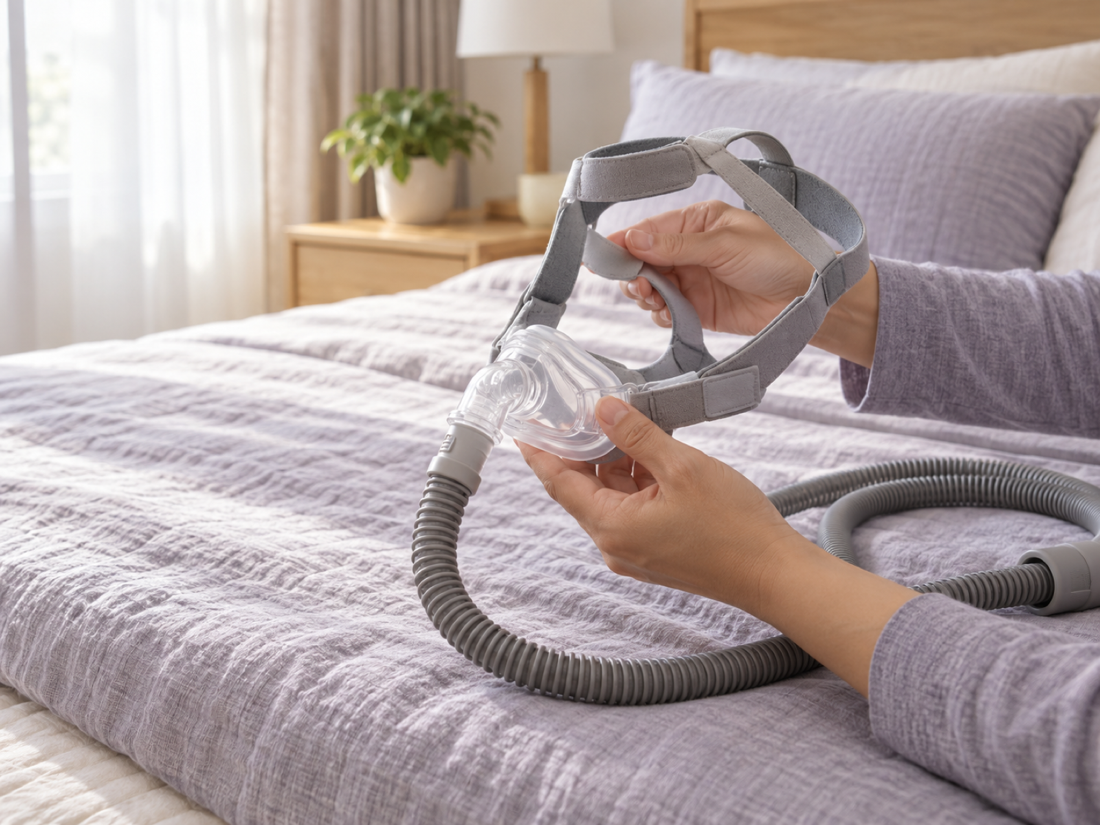
Masks are bought separately, from RM600 for the mask only. If you are still choosing a machine, you can see each model in our CPAP machines or answer our help-me-choose questions. The AirStart 10 rents at RM280 / month and the AirSense 10 AutoSet at RM450 / month; part of the rental can count towards buying, confirmed on WhatsApp. Delivery covers every location in Malaysia, from Seremban to Kota Bharu and Kuala Terengganu.
Unsure which mask type fits the way you sleep? Tell us how you sleep and we will talk it through.
This article is general guidance, not medical advice. Your doctor decides whether CPAP therapy suits you and sets its pressure and other settings.