Feeling Closed In by a CPAP Mask? Getting Used to It Slowly
Feeling closed in by a CPAP mask is a common first reaction. These gentle steps help first-time users get used to the mask slowly.
Gentle, practical steps for first-time CPAP users who feel closed in by the mask
Many people put on a CPAP mask for the first time and feel an urge to pull it straight off. There is something on your face, air is flowing, and lying in the dark with it can feel closed in. This is a common first reaction, and it does not mean CPAP is not for you. Often it simply means you need to get used to it more slowly.
This article shares some gentle, practical ideas for doing that. They are general guidance only. If the feeling is strong or does not ease, talk to your doctor, who decides on your therapy and its settings.
Why a CPAP mask can feel confining at first
Most of us never wear anything on our face while we sleep. A mask, straps around the head and a steady flow of air are three new things at once. Add a dark, quiet room, and the mind can treat the mask as something to escape from. Knowing that this is a normal response takes some of the pressure off. You are not doing anything wrong, and you do not have to get it right on the first night.
Practise with the mask while you are awake
You do not have to meet the mask at bedtime. Many first-time users find it easier in the daytime, when they feel calm and in control. One gentle order to try:
- Hold the mask against your face with your hand, without the straps, while you watch TV or read. Take it away whenever you like.
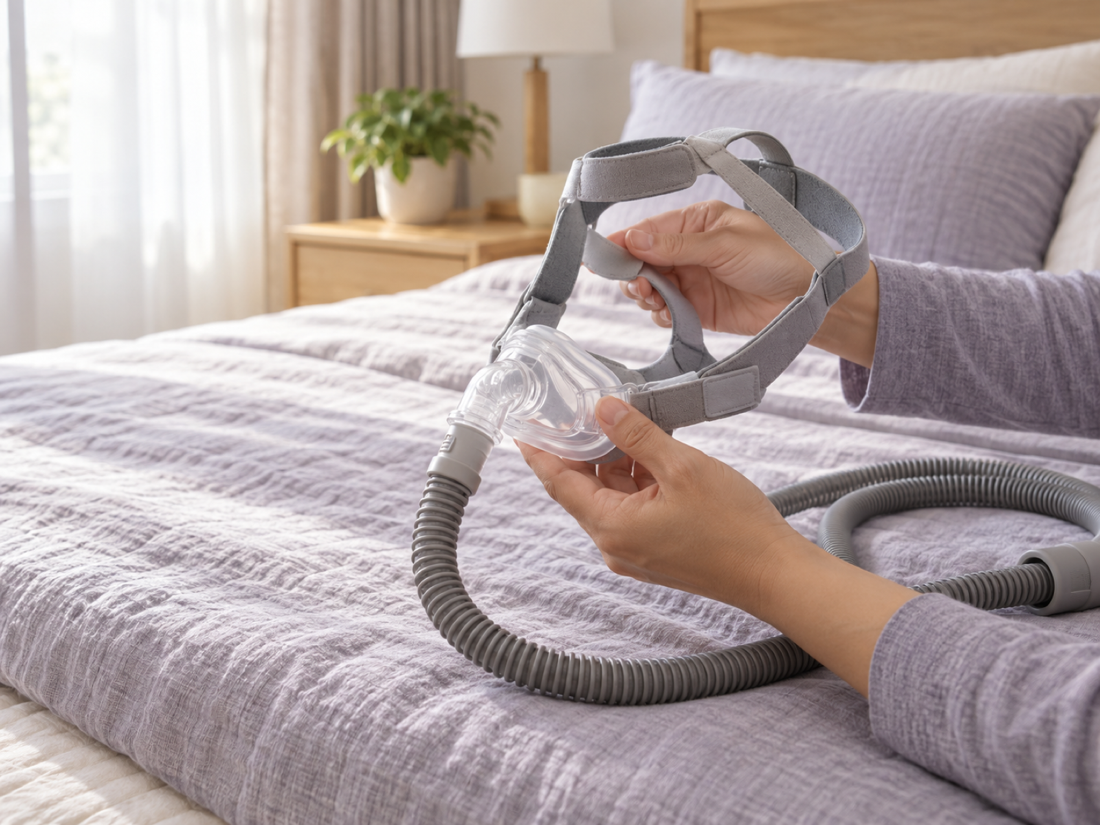
- When that feels easy, put the straps on and wear the mask for a few minutes, still without the machine.
- Next, connect the mask to the machine, turn it on and breathe through it while sitting up. Breathe slowly and let the air do the work.
- Then try the same lying on the bed with the lights on.
Go at your own pace. Some people move through these steps in one evening; others take a week or two. Both are fine.
Keep the first sessions short
Short, calm sessions often help more than one long, tense one. You might wear the mask with the machine running for ten minutes in the evening, then a little longer the next day. At bedtime, put it on as usual. If you wake up feeling closed in, it is all right to take it off, breathe for a moment and try again. Keep a simple note of how each night went so you can share it with your doctor.
Family can help too. Sitting nearby during the first tries, or simply not rushing, makes a real difference, especially for an older parent who is new to CPAP.
Try a mask type that covers less of your face
The type of mask matters a lot here. A full face mask, such as the AirFit F20, covers the nose and mouth. A nasal mask, such as the AirFit N20, covers the nose only. Nasal pillows, such as the AirFit P30i, sit at the nostrils with very little on the face, so you can still see clearly and even read with glasses before you sleep. For many people who feel closed in, a lighter mask feels far less confining.
The right type also depends on how you breathe at night, so check with your doctor before you switch. Masks are bought separately, from RM600 for the mask only.
Ask about the ramp feature
For some people, the closed-in feeling comes mostly from the airflow at the start of the night. A ramp setting starts the air at a lower pressure while you fall asleep, then rises gently to the level your doctor set. On the ResMed AirSense 10 AutoSet, AutoRamp waits until it senses you have fallen asleep before it rises. Ask your doctor whether ramp suits you and how it should be set, and never change the pressure yourself.
Small things that help at bedtime
- Keep a soft lamp on for the first few nights, so the room does not feel closed in as well.
- Put the mask on while sitting up, press Start, then lie down.
- Breathe slowly and count a few breaths if your mind starts to race.
- Keep the machine on the bedside table, close to you, so everything is within reach.
- If you take the mask off in the night, do not be hard on yourself. Note it down and mention it to your doctor.
If you are still choosing a machine, you can look through our CPAP machines or answer a few help-me-choose questions. Some families rent while a parent is getting used to therapy: the AirStart 10 is RM280 / month and the AirSense 10 AutoSet is RM450 / month, and part of the rental can count towards buying. Delivery covers every location in Malaysia, including Shah Alam, Ipoh and Kuching.
Not sure which mask type to ask your doctor about? Send us a message.
This article is general guidance, not medical advice. Your doctor decides whether CPAP therapy suits you and sets its pressure and other settings.